
How to Start a Budget: 8 Simple Steps With Printable Budget Planners
A step-by-step way to set up your first budget: income, bills, spending, sinking funds, an emergency fund and a debt plan, plus the printables that help at each step.
Starting a budget can feel like a big, scary project. You open a spreadsheet, see a hundred categories and close it again. The good news: a budget that works is usually much simpler than that. With a few printable pages and one short money session per week, you can see where your money goes and start making it go where you want.
Here is a step-by-step way to set up your first budget, plus which budget printables help at each step.
Step 1: Write down your income
List every source of money that comes in each month: salary, side income, benefits, child support. If your income varies, use the lowest amount from the last few months so your budget stays realistic.
If you get paid more than once a month, budgeting per paycheck is often easier than budgeting per month. A budget by paycheck tracker shows exactly which bills and expenses each paycheck needs to cover.
Step 2: List your fixed bills
Fixed bills are the ones that come back every month: rent or mortgage, utilities, insurance, phone, internet and subscriptions. Write down the amount and the due date of each one.
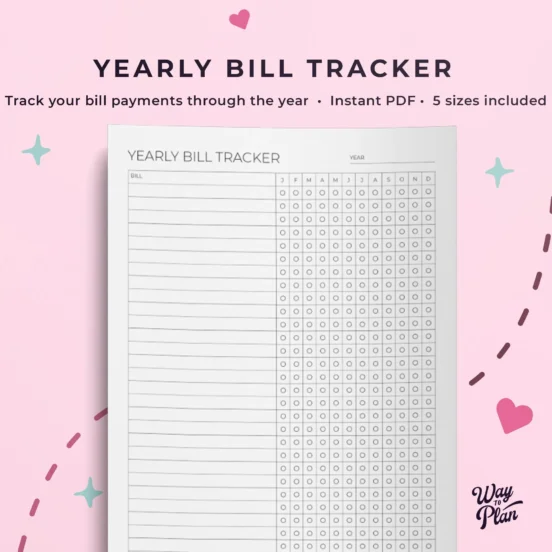
A monthly bill tracker lets you check off bills as you pay them, so late fees become a thing of the past. For a view of the whole year, including bills that only come once or twice a year, use a yearly bill tracker.
Step 3: Track your spending for one month
Before you set limits, find out what you actually spend. For one month, write down every purchase: groceries, takeout, gas, clothes, gifts. It is often surprising (and very useful) to see where the money really goes.
An expense tracker with your own categories makes this quick. Tip: add up your spending once a week, not once a month, so it never becomes a big job.
Step 4: Choose a budgeting method
There is no single right method. Pick the one that matches how you think:
- Zero-based budget: every dollar gets a job until income minus expenses equals zero. Great if you want full control. Use a zero-based budget tracker.
- 50/30/20 rule: roughly 50% of your take-home pay goes to needs, 30% to wants and 20% to savings and extra debt payments. Simple and flexible.
- Pay-yourself-first: move a fixed amount to savings on payday and spend the rest freely. Ideal if detailed tracking isn’t for you.

Step 5: Plan for irregular expenses with sinking funds
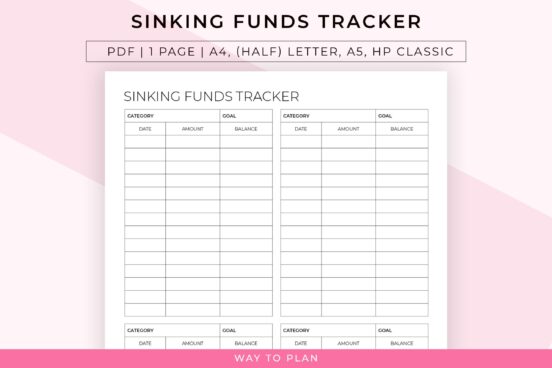
Car repairs, birthdays, holidays and annual subscriptions are not surprises, they just don’t happen every month. A sinking fund means saving a small amount each month for these expenses, so they don’t wreck your budget when they come. A sinking funds tracker keeps all your funds in one overview.
Step 6: Build an emergency fund
An emergency fund is money set aside for truly unexpected costs, like a job loss or medical bill. A common goal is three to six months of essential expenses, but starting with a smaller first goal is perfectly fine. Track your progress with an emergency fund tracker.
Step 7: Make a plan for debt
If you have debt, choose one of two popular payoff strategies. With both, you make minimum payments on all debts and put any extra money toward one debt at a time:
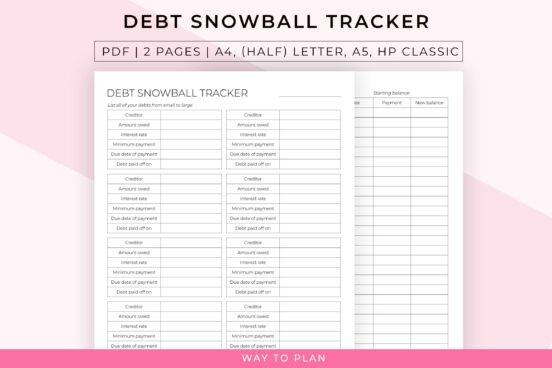
- Debt snowball: pay off the smallest balance first. Quick wins keep you motivated. Use the debt snowball tracker.
- Debt avalanche: pay off the highest interest rate first. This usually saves the most money in interest. Use the debt avalanche tracker.
Step 8: Make saving fun with a challenge
Savings challenges turn saving into a game you can color in. Try a no spend challenge for a month, or work toward a bigger goal with the 10k savings challenge.
Keep it going: the weekly money date
A budget is not something you make once. Schedule 15 minutes each week to add up your spending, check off paid bills and update your savings trackers. Small, regular check-ins are much easier to keep up than one big monthly session.
Want everything in one planner?
Instead of separate pages, you can also use a complete budget planner:
- On paper: the Budget Planner Printable with pages for budgeting, bills, debt and savings in a simple layout.
- In Google Sheets: the Google Sheets Budget Planner does the math for you and is made for beginners. See our budget tracker walkthrough.
- On your iPad: the GoodNotes Budget Planner, a hyperlinked digital budget planner.
Browse all budget and finance planners.
Budget printables to get started
-

Yearly Bill Tracker | Payment Calendar & Budget Planner Printable
Stay organized and never miss a payment with this yearly bill tracker! This simple yet effective tool helps you monitor your bills throughout the year.$3.99 -

Debt snowball tracker to keep track of your debt payments to get debt free.
This Debt Snowball Tracker allows you to list all your debts from smallest to largest and track each payment made towards them until they are fully paid off!$2.99 -
Sinking funds tracker to be prepared for future expenses and save for clear goals
Plan your financial future wisely with this sinking funds tracker. Give every dollar a goal, from emergencies to dream vacations. Avoid impulse buys by setting aside funds for planned expenses.$2.99
Frequently asked questions
What is the easiest way to start a budget?
Write down your income and fixed bills, track your spending for one month, then set limits for your biggest spending categories. Keep it simple and review it weekly.
Is a printable budget planner better than an app?
It depends on you. Writing things down by hand makes many people more aware of their spending, and there are no notifications to distract you. Apps and spreadsheets are faster for calculations. Many people combine both.
What is the difference between a sinking fund and an emergency fund?
A sinking fund is for expenses you know are coming, such as holidays or car maintenance. An emergency fund is for costs you can’t predict, such as a job loss.
Debt snowball or debt avalanche: which is better?
The avalanche method usually costs less in interest. The snowball method gives faster wins, which helps many people stay motivated. The best method is the one you will stick with.
This guide is general information, not personal financial advice.